
Medical device to support physiotherapy through visual stimulation with video game, which is responsible for measuring the inspired airflow and transmits data to the cloud to monitor the patient with quantitative and online information of the patient’s performance in physiotherapy, for the performance of clinical studies and evaluation of the results of pulmonary re-expansion.
SENSUM SARS Cov-2 is a portable, low-cost electrochemical sensor for the non-invasive, rapid and accurate quantification and detection of coronavirus-2 in symptomatic and asymptomatic patients.

For over a decade, in various roles as an engineer, I’ve had a constant responsibility throughout my career: mobilizing people. People to achieve business goals, to adopt new ideas, and now to transform scientific and technological developments into market-ready solutions.
That need led me to delve deeper into human behavior and pursue a master’s degree in Applied Neurohappiness. I was driven by a big question: what truly motivates people? What drives them to commit, to act, to change?
At that time, I was working at an engagement agency focused on achieving business goals. Time and again, I confirmed that to achieve sustainable results, I first had to understand the people I wanted to engage.
From that academic and professional experience, an idea emerged: to promote positive emotional states to activate chemical and biological changes in the brain that would make us more adaptable, creative, and productive. By lowering cortisol, our executive functions operate more clearly. With that conviction, I developed an app focused on enhancing positive emotions in work environments. It had scientific backing, intention, and purpose. But then the question arose that would change my understanding of innovation:
What real problem does it solve? Who is it truly relevant to? Why would anyone be willing to adopt or pay for it?
That’s when I understood something essential: it’s not enough for a solution to work. It has to connect.
Today, as head of marketing and technology transfer, supporting universities, startups, and corporations in their innovation processes, I’m encountering the same reality. Many initiatives don’t fail due to a lack of technical knowledge; they fail because they can’t connect with their target audience.
Technology can be developed, talent can be recruited, and capital can be raised. But if we can’t explain why it matters, who it matters to, and what impact it has, innovation won’t be adopted and, therefore, won’t have an impact.
Leading innovation involves much more than managing projects. It involves managing egos, expectations, and fears. It involves translating scientific language into business language. It involves building trust among stakeholders who have never worked together before.
I’ve seen extraordinary technologies get stuck in a technical pitch due to a lack of narrative. And I’ve also seen technically simple solutions scale because someone knew how to articulate them clearly and purposefully.
The real challenge for the ecosystem isn’t technical, it’s human. It requires researchers to listen to the market, corporate leaders to recognize that innovation also comes from outside and understand that piloting involves uncertainty, and someone to have the courage to take risks even without absolute certainty.
My greatest lesson on this journey hasn’t been about mobilizing knowledge, but about mobilizing mindsets. Because leading innovation, more than a technological challenge, is a profoundly human act of leadership.
Fusióni3 Valle concludes with significant results. A general objective was achieved by strengthening innovation in 20 companies in the Valle del Cauca region, which, through their connection with universities, consolidated a culture of collaboration to develop products and services hand in hand with science and technology.
To achieve this, the project carried out various objectives and activities led and coordinated by a human team that acted as a bridge between five universities and entrepreneurs who, although they did not know each other previously, shared an interest in working together.
From managing alliances to closely monitoring each process, the team facilitated spaces for interaction, supported the dialogue, and was able to closely observe the evolution of each initiative, which is now a source of pride for the members of Fusióni3 Valle, who were also recognized by participating researchers and entrepreneurs.

This dialogue also extended to other training settings, such as the Autonomous Foundation of the West, Fundautónoma, where the capacities of 50 young people from its School of Entrepreneurship were strengthened, including job skills related to innovation processes.
The young people learned about the projects firsthand by interacting with entrepreneurs, researchers, coordinators, and managers; they toured company and university headquarters and participated in feedback sessions where they put forward their own solutions and proposals. This exercise broadened the project’s scope and generated expectations for new ways of working closely together between academia, business, and the community.
During the project, strategies were developed to leverage the intellectual capital of universities and their relationship with the productive sector, innovation management was strengthened in 20 companies, and ten university-business alliances were consolidated that developed or improved innovative services and products.
This is how the team members highlight their participation.
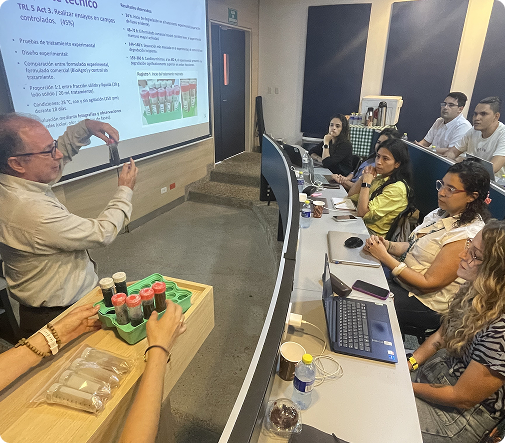
Fusióni3 Valle is seen as an experience of collective leadership and constant articulation between academic and business capabilities.
“The experience of working on this project was very rewarding. I was accompanied by a team that supported, led, and managed the university-business partnerships that developed innovative products and services, and most importantly, began to create a culture of collaborative innovation.”
“I want to highlight the collaboration seen in the execution of the university-business projects, their work to achieve the stated objectives, and how companies recognize universities as allies and service providers that they had not previously identified.”
“One of the most significant lessons learned from the project was the development of a unified voice. Moving from an initially technical foundation to a common language, built jointly between academia and the productive sector.”
The project allowed us to experience innovation firsthand and understand how academic knowledge translates into applicable solutions.
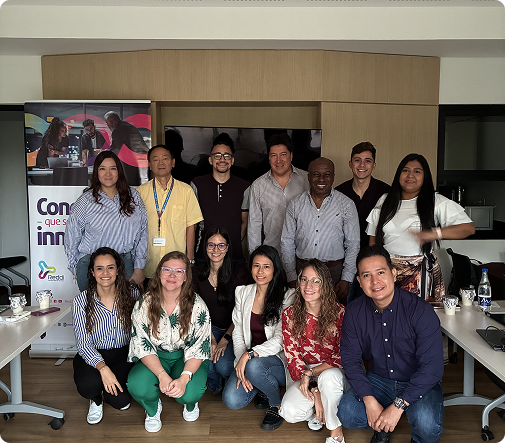
“The experience in the Fusióni3 Valle project was key to understanding how these research results are linked to development and innovation, and how academia responds to real needs of the productive sector.”
“Accompanying both parties in the process of building alliances and finding solutions to their challenges was a very enriching experience. Understanding how both academia and the business sector operate allowed me to provide effective support.”
“There was a clear evolution from initial ideas to more solid solutions, designed to operate in real contexts, the result of constant work of adjustment, learning and continuous improvement.”
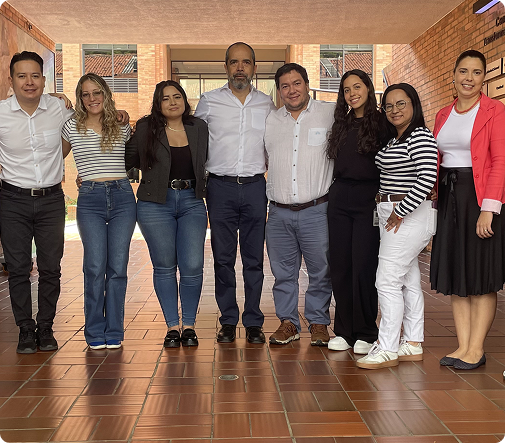
In addition to the technical results, Fusióni3 Valle provided personal learning experiences, connections, and new ways of understanding innovation as a human and collaborative process.
“What I value most about the Fusióni3 Valle experience is having witnessed the real growth of partnerships, not only in technical terms, but also in human terms. We went from speaking ‘different languages’ to building honest and collaborative conversations between business and university.”
“For me, Fusióni3 Valle was, above all, an exercise in reality. In understanding what innovation is like when it stops being just a good intention and faces real decisions and concrete conditions.”
“I greatly value having witnessed firsthand how universities and companies worked together, following their processes and presenting them as a testament to all that can be achieved through collaboration.”
The Fusióni3 Valle Innovation Voucher proved to be a concrete opportunity for the 20 companies benefiting from the project, including those not participating in the Maturation Fund, to advance their initiatives and strengthen their ties with universities. Through this instrument, the companies were able to address previously defined challenges through technical and commercial validations that, for the most part, met initial expectations.
According to Marcela Mora, coordinator of Business Strengthening at Fusióni3 Valle, many of these organizations already had a prior base that facilitated the use of the voucher.
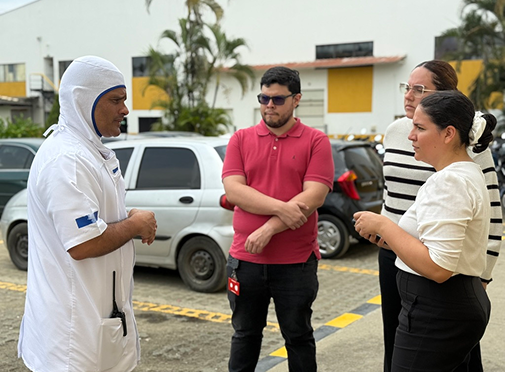
“They had already drafted their project for the Maturation Fund, so they had a preconceived idea that they were able to bring a little closer to reality, thanks to the joint work with the universities,” he explained.
The voucher program had a service-oriented approach, with an average development time of six months. This process was characterized by constant participation from the companies: regular meetings were held to present progress, validate service development, and adjust the scope when necessary.
“The companies were very open, not only in tracking deliveries, but also in contributing and giving ideas,” the coordinator said.
The support provided to companies included access to production facilities, software, and human resources, as well as ongoing mediation between academic terminology and business expectations. In several cases, this process broadened the entrepreneurs’ perspective without straying from the requirements defined in the initial challenge and paved the way for future collaborations with universities.
From a university perspective, the experience also represented significant learning. For the University of San Buenaventura Cali , which developed two innovation vouchers with the companies Grupo North and K-listo , the process allowed them to work on real challenges in the productive sector under specific conditions of time, resources, and objectives. Professor Gustavo Agudelo, director of the Business Administration program, explained it this way:
“For the university and for me, as a consulting project manager, the vouchers were a valuable opportunity to connect industry and academia around real-world challenges. Companies were able to verify that the university has highly skilled human capital and the technical and methodological capabilities to propose viable, measurable solutions aligned with the market and operations.”
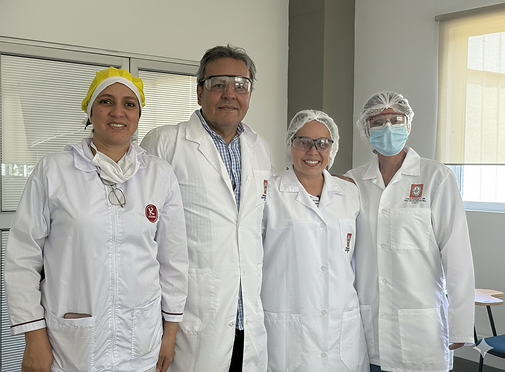
At the same time, universities were challenged to better understand business dynamics and adapt their communication and work methods to the expectations of the productive sector, thus strengthening their ability to respond to specific innovation challenges.
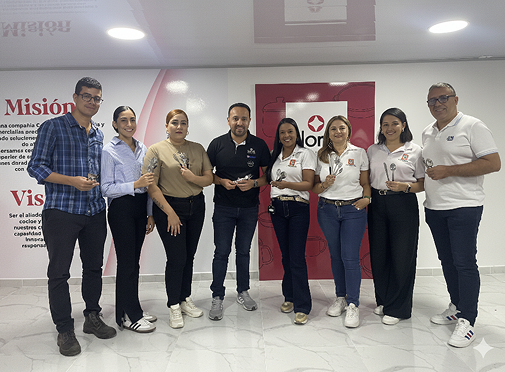
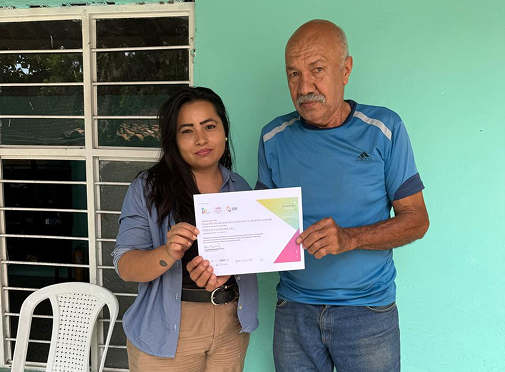
In this way, the Innovation Voucher was consolidated as a space for mutual learning that strengthened capabilities, generated trust and opened new avenues of collaboration between companies and universities within the innovation ecosystem promoted by Fusióni3 Valle.
When we started the Fusióni3 project, I thought the main challenge would be technical. Articulating the innovation needs of fifty companies with the capabilities of nine universities sounded complex, but manageable. After all, both worlds need each other. What could go wrong?
Three years later, I understood that the challenge was never technical. It was political, human, about timing, language, and, above all, expectations that were never going to align perfectly. Because we weren’t working with two actors, we were working with three. And each one operated under logics that, more than just different, were sometimes directly incompatible.

The universities brought something invaluable: knowledge. In many cases, research groups helped companies understand that the problem they thought they had wasn’t the real one. This support elevated the level of the discussion and allowed for more informed decisions. That’s something rarely achieved without academic backing.
But that same knowledge came with a structural difficulty. Having the capacity to solve a challenge—the people, the laboratories, the infrastructure—doesn’t mean having a service ready to offer to the market. When a company expressed interest, the valuation of the work was usually a sum of costs: salaries, use of space, equipment, student interns. The result was a technically justifiable budget, but one that the market wasn’t willing to pay. And that’s where the friction began.
The companies, for their part, contributed dynamism, enthusiasm, and a practical perspective that kept us grounded in reality. Their focus on the customer and the product helped us avoid getting lost in abstract concepts. This exchange is one of the greatest benefits of collaboration between universities and businesses: combining scientific rigor with business acumen.
But that same dynamism came with anxiety. At first, three years seemed like an eternity to develop a technological solution. Over time, reality revealed a different side: many were operating with such tight schedules that they struggled to complete tasks, maintain the project’s pace, or coordinate meetings with researchers. And when conversations arose about intellectual property or licensing—common topics in the academic world—the language became unfamiliar, and the discomfort slowed everything down.
The government, in this case the Ministry of Science which oversaw the project, had people with solid technical knowledge who helped anticipate risks and protect us from scrutiny by regulatory bodies. That role is valuable and necessary.
But that same care resulted in a flood of information requests. Much time was spent drafting responses that seemed straight out of a manual, uploading files to platforms designed in another era, and fulfilling requirements that, while important, consumed a disproportionate amount of energy. And because the supervisory body was managing many projects simultaneously, response times tended to be longer, gradually impacting the teams’ workflows.
None of these three were wrong. But they weren’t automatically compatible either.
The most difficult thing to manage was the timing. Universities work in research cycles measured in years. Companies operate in quarters, with constant pressure for immediate results. Government functions in political periods and budget cycles that have their own logic. Synchronizing all of that is nearly impossible.
I learned that I couldn’t force artificial synchronizations. I couldn’t make research move faster without compromising rigor. I couldn’t make companies wait indefinitely without losing interest. I couldn’t make the government ignore its oversight and accountability obligations.
What it could do was design agreements that acknowledged those differences. Partial deliveries that would give the company something tangible while the research progressed. Intermediate indicators that would give the government visibility without demanding premature final results. Flexibility in deadlines that would give universities reasonable space without becoming indefinite.

But even those agreements were fragile. Because when a business owner cancels a meeting for the fourth time because “the week got complicated,” the researcher starts to feel their work isn’t valued. And when a researcher asks for “a couple more months” to validate results, the business owner begins to doubt that this is going anywhere. And when the supervisor requests an additional report to clarify a point that was already explained, everyone feels they’re working for compliance, not impact.
There are things that don’t appear in reports but that determine the outcome of a project. A researcher might refuse to collaborate with a company not because the technology doesn’t work, but because that collaboration compromises their academic autonomy or delays a publication they need for their career. An entrepreneur might withdraw not because the solution is bad, but because the process is so slow that they’ve already missed the market opportunity. A public official might block a contract modification not because it’s unfeasible, but because it complicates their relationship with the oversight department.
I learned to read those unwritten codes. To understand that prestige matters as much as resources in the academic world. That reputational risk can outweigh financial risk for a company. That political visibility can define the continuity of a program more than its technical impact.
Understanding that allowed me to anticipate resistance that wasn’t obvious. And it also forced me to accept something uncomfortable: sometimes a project isn’t viable not because it’s technically flawed, but because the goals of the three worlds are too divergent.

Leading these kinds of projects makes you suspect to all three groups. Researchers may see you as too commercial. Businesspeople as too academic. The government as someone who doesn’t understand oversight responsibilities or is too focused on the technical aspects.
That suspicion is inevitable. Because you don’t belong completely to either side. And that’s unsettling. But it’s also what allows you to mediate, because you’re not exclusively loyal to any one logic.
I learned to tolerate that discomfort. Not to try to convince anyone that I belonged to their world. Instead, I learned to demonstrate that I understood all three of them well enough to help them collaborate without betraying each other. What I could do was design agreements that acknowledged those differences. Partial deliveries that gave the company something tangible while the research progressed. Intermediate indicators that gave the government visibility without demanding premature final results. Flexibility in deadlines that gave universities reasonable space without becoming indefinite.
And I learned something even more important: my job wasn’t to make these worlds think alike. It was to create spaces where they could collaborate without compromising their defining characteristics. Where researchers could defend their rigor. Where entrepreneurs could manage their risk. Where governments could fulfill their mandates. But even these agreements were fragile. Because when an entrepreneur cancels a meeting for the fourth time because “the week got complicated,” the researcher begins to feel their work isn’t valued. And when a researcher asks for “a couple more months” to validate results, the entrepreneur starts to doubt whether this is going anywhere. And when a supervisor requests an additional report to clarify a point already explained, everyone feels they’re working for compliance, not impact.
The most important conversations weren’t those that sought consensus. They were those that sought mutual understanding. That the researcher understood that the entrepreneur wasn’t being anxious, but rather managing commercial viability. That the entrepreneur understood that the researcher wasn’t being a perfectionist, but rather defending scientific validity. That the government understood that innovation timelines don’t align with administrative cycles.
When that understanding existed, agreements could be drawn up. When it didn’t, there was only frustration.
The I3 merger yielded concrete results: products and services that are now on the market or on their way. But the most profound lessons aren’t found in the metrics. They lie in the difficult conversations we had. In the tensions we learned to make visible and manageable. In the companies that understood that research takes time. In the researchers who learned to translate their knowledge into commercial value propositions. In the officials who streamlined processes whenever possible.
Working at that intersection is exhausting. Because you’re always translating, mediating, explaining, managing expectations. There’s never a simple solution because the systems are inherently complex. And sometimes you have to pause and remind the team of something essential: most of our time, focus, and creativity should be on the client and the real impact of the project, not on pleasing the supervisor.
But it’s also where the most interesting things happen. Where science finds real-world application. Where companies access knowledge they couldn’t generate on their own. Where government can catalyze innovation that benefits more people.
When those connections work, when you see a researcher, an entrepreneur, and an official building something together that none of them could achieve alone, you know that the invisible work of articulation was worth it.
Follow us
Contact Us
Calle 8 # 3 – 14, 17th floor, Santiago de Cali, Colombia
info@reddicolombia.com
+57 602 300 912 4280
An agency recognized by Minciencias
