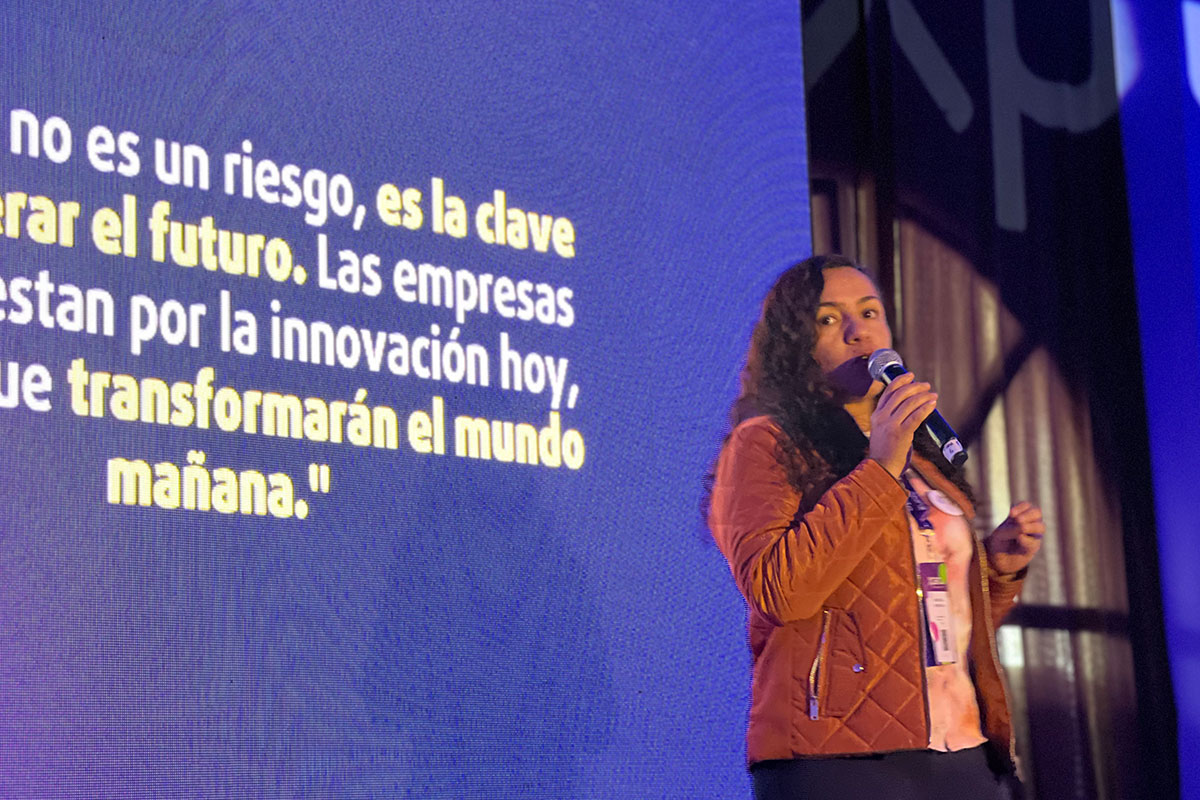
For over a decade, in various roles as an engineer, I’ve had a constant responsibility throughout my career: mobilizing people. People to achieve business goals, to adopt new ideas, and now to transform scientific and technological developments into market-ready solutions.
That need led me to delve deeper into human behavior and pursue a master’s degree in Applied Neurohappiness. I was driven by a big question: what truly motivates people? What drives them to commit, to act, to change?
At that time, I was working at an engagement agency focused on achieving business goals. Time and again, I confirmed that to achieve sustainable results, I first had to understand the people I wanted to engage.
From that academic and professional experience, an idea emerged: to promote positive emotional states to activate chemical and biological changes in the brain that would make us more adaptable, creative, and productive. By lowering cortisol, our executive functions operate more clearly. With that conviction, I developed an app focused on enhancing positive emotions in work environments. It had scientific backing, intention, and purpose. But then the question arose that would change my understanding of innovation:
What real problem does it solve? Who is it truly relevant to? Why would anyone be willing to adopt or pay for it?
That’s when I understood something essential: it’s not enough for a solution to work. It has to connect.
Today, as head of marketing and technology transfer, supporting universities, startups, and corporations in their innovation processes, I’m encountering the same reality. Many initiatives don’t fail due to a lack of technical knowledge; they fail because they can’t connect with their target audience.
Technology can be developed, talent can be recruited, and capital can be raised. But if we can’t explain why it matters, who it matters to, and what impact it has, innovation won’t be adopted and, therefore, won’t have an impact.
Leading innovation involves much more than managing projects. It involves managing egos, expectations, and fears. It involves translating scientific language into business language. It involves building trust among stakeholders who have never worked together before.
I’ve seen extraordinary technologies get stuck in a technical pitch due to a lack of narrative. And I’ve also seen technically simple solutions scale because someone knew how to articulate them clearly and purposefully.
The real challenge for the ecosystem isn’t technical, it’s human. It requires researchers to listen to the market, corporate leaders to recognize that innovation also comes from outside and understand that piloting involves uncertainty, and someone to have the courage to take risks even without absolute certainty.
My greatest lesson on this journey hasn’t been about mobilizing knowledge, but about mobilizing mindsets. Because leading innovation, more than a technological challenge, is a profoundly human act of leadership.